
Frank X Walker and Jon Cherry Believe the Rural-Urban Divide is Smaller Than You Think
On Sunday, November 8, Kentucky to the World partnered with the Kentucky Rural-Urban Exchange (RUX), Art of the Rural, and Kentucky Performing Arts to host the 2026 Golden Thread, an annual forum bringing together visionary leaders from across Kentucky to foster unity across cultures and communities in the Commonwealth.
In anticipation of this event, Kentucky to the World brought together two extraordinary artists and individuals - Frank X Walker, emcee of Golden Thread 2026, and Jon Cherry, Kentucky to the World board member - for a wide-ranging conversation covering everything from identity and belonging to artistic process to how a divided world might just be closer together than anyone thinks.
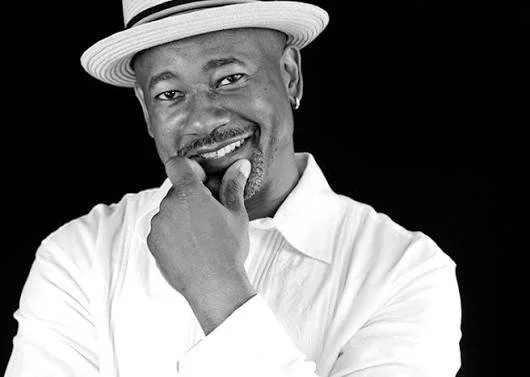
Frank X Walker is a multidisciplinary artist from Danville, KY. He holds the endowed C.R. Lezius Professorship in the Arts at the University of Kentucky and is the College of Arts and Sciences 2026-2027 Distinguished Professor. A co-founder of the Affrilachian Poets, Walker is the originator of the word Affrilachia and is dedicated to communicating how literacy and the arts impact our quality of life. The Lannan Poetry Fellowship Award recipient has degrees from the University of Kentucky and Spalding University as well as four honorary doctorates from the University of KY, Centre College, Spalding University, and Transylvania University
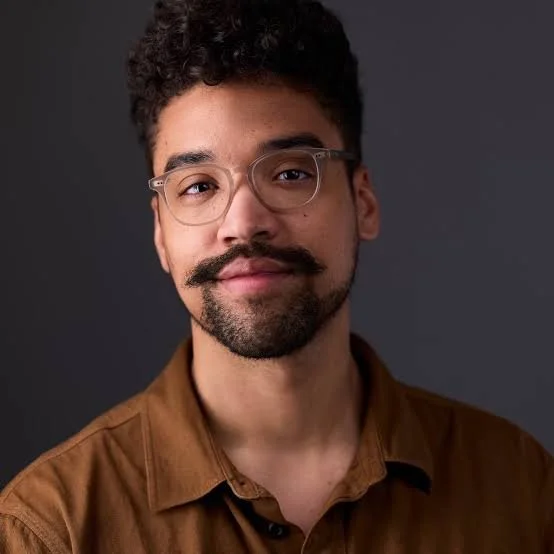
Jon Cherry is a Pulitzer Prize-winning photographer based in Louisville, KY. Born in Fort Bragg, NC, to parents in the US armed forces, Jon has spent his adult life earning the title he wears most proudly: Kentuckian. His work moves across disciplines with a single animating impulse: to find the true spirit of America in the people and moments that define it. Cherry was awarded with the 2022 Pulitzer Prize for Breaking News Photography for his and the Getty team’s coverage of the January 6 Riot at the US Capitol.
Read an excerpt from Walker and Cherry’s conversation below.
Jon Cherry: “Affrilachia” is essentially a rural urban-exchange in one word. You have a life in between the two. What do you think each side misunderstands about each other?
Frank X Walker: Oh, wow. That's a great question. You know, I think if there's a single answer, if it applies to both ends, I think both sides underestimate how far apart they aren't. For me, from the very beginning, when I wrote the poem that end up using the word [“Affrilachian”] at the end, I was trying to tease out the same idea.
I had just encountered in a dictionary a definition of Appalachia that restricted users to being white. You know, it said Appalachians were the white residents of the mountainous regions of Appalachia.
And so I immediately asked myself, well, if it's based on geography, what are you if you aren't white and you live in the same space? That seemed like a very thin layer of epidermis. And, you know, did it render you invisible? Did it mean you didn't belong? Was it a political answer? Was it intentional?
Because when I started thinking about my friends in the region, it became more about, you know, what do we have in common? You know, I think about the oral traditions, the food, the kind of family dynamics, the love of storytelling, sitting on the front porch. There was a lot more stuff and energy in the things that that bound us together, versus that layer of epidermis that made us different and disqualified us from belonging based on that definition. And it was just wrong to me.
[...]
I just remember [my friends’] response to that word was almost immediate, that there was something about the power of the word. And maybe it was the fact that it did live in both spaces. It's automatically a rural-urban exchange in one space. But I think it's how quickly everyone in that room felt at home inside that word and also recognized that there wasn't a single person who wasn't from two other places, or more than two other places. And so the thing that was important was, you know, if we stand in the middle of that, uh we're all standing on top of each other. You know, that's the thing that we all have in common. So, you know, I mean, that was a long-winded version of suggesting that it's just skin, an experience, an attitude, and it’s much smaller than all the things that we have in common. I think that's what we get wrong.
JC: Yeah. Rural and urban Kentucky are often spoken like they're two different states entirely.
FXW: Well, I know people and friends in Louisville who say they live in Louisville, not Kentucky. And I think what they mean is that they just don't identify with the rural experience because they've never experienced it. And I think in some ways, they're afraid of it. In the same way that, you know, when I grew up in my small town of Danville, I had siblings who were afraid of Lexington. They wouldn't drive past Fayette Mall because they would be in the city and they had heard things about the city. And they wanted to retreat back to their comfort zones back in our small town.
And I think for a lot of people, we're all afraid of something. You know, we all have comfort zones. And I think it's, you know, if you live in a way that's about staying inside your comfort zones, you don’t get to grow. You don't get to find out where your real limits are. I think that's what art making is about: kind of teasing those borders, your own and other people's, if that makes sense at all.
JC: It does make sense. What do you think we have to learn from each other? The rural and the urban and the folks in between.
FXW: I think everything. I think the things we have to learn are all the things we don't know yet. I think it's that ignorance that keeps us in the dark. I think it's more than just that we should have a higher appreciation for each other. You know, I think about those people who when they're young and coming out of high school, their plan is to get the hell out of Kentucky. And I asked them, "Well, where do you plan to go?" “Going to New York City. I’m going to make it in New York City,” or whatever the city of their dream is. And then I run into those same kids, you know, as young adults, 10 years later, 15 years later, and they're back. But they return with a higher appreciation for everything they left. That whole “grass is greener” thing is a real thing, and some people have to learn in person. You know, they need to know that.
[...]
I think our strength is in our diversity. I would not want to be in any space where everybody thought the exact same thing, or dressed the same way, or talked the same or walked the same or listened to the same song. You know, that's way too far inside the boundary and that's way too small a way to live.
You can watch the rest of Frank X Walker and Jon Cherry’s conversation on Kentucky to the World’s YouTube Channel or listen via Art of the Rural’s Podcast Feed. We are deeply grateful to RUX, Art of the Rural, and Kentucky Performing Arts for helping enable conversations like these through programs The Golden Thread and beyond.
